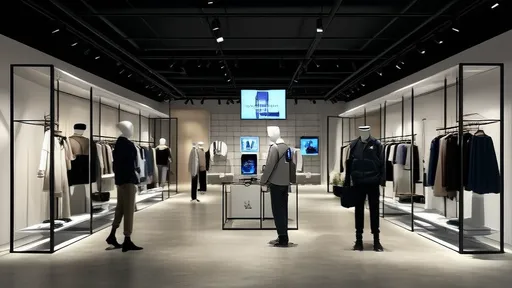
The retail landscape has shifted dramatically over the past decade, and nowhere is this more evident than in the world of curated multi-brand boutiques, commonly known as buyer shops or concept stores. Once the darlings of the fashion-forward and the intellectually curious shopper, these establishments now navigate a complex web of challenges that threaten their very existence. The central question echoing through the minimalist interiors and carefully arranged displays of these stores is no longer just about what to sell, but how to survive and thrive in an era of overwhelming digital choice and homogenized luxury.
The initial appeal of the concept store was its power of curation. In a pre-digital age, the store's buyer acted as a trusted tastemaker, a gatekeeper to a world of unique, undiscovered, or otherwise inaccessible brands. This was a service in itself. The value proposition was clear: we have done the hard work for you. We have traveled, researched, and selected only the finest, most interesting, and most coherent products to present under one roof. This saved the discerning customer countless hours of their own research and provided a sense of discovery that large department stores, with their sprawling, often impersonal floors, could not match.
However, the internet, as it has with so many industries, has fundamentally dismantled this monopoly on discovery. The modern consumer is now their own curator. Algorithms on platforms like Instagram, Pinterest, and Net-a-Porter offer a relentless, personalized stream of inspiration and products from every corner of the globe, often available for immediate purchase. The unique ceramic vase or the limited-run sneaker that was once the exclusive domain of a cool downtown boutique can now be found, compared, and bought online with a few clicks. This erosion of exclusivity strikes at the very heart of the traditional buy shop model.
Compounding this issue is the phenomenon of brand democratization. Many of the independent, niche labels that these stores built their reputations on have grown exponentially, often leveraging their boutique stockist history as a springboard to wider recognition and direct-to-consumer (DTC) operations. Why would a customer buy a brand from a multi-label store when they can purchase it directly from the brand's own beautifully designed website, often with a fuller size run and a more comprehensive collection? The boutique, in this scenario, risks becoming little more than a costly showroom for brands that no longer need it as their primary sales channel.
Furthermore, the economic pressures are immense. Operating a physical retail space, particularly in the high-footfall urban centers essential for this model, involves exorbitant rents, staffing costs, and utilities. These fixed costs create a high barrier to profitability, forcing stores to either maintain significant markups—which can alienate price-sensitive customers—or operate on razor-thin margins. This financial tightrope walk leaves little room for error or for the experimental buying that often defines a store's character.
In the face of these existential threats, the most forward-thinking concept stores are not merely adapting; they are redefining their purpose. They understand that in a world saturated with product, the new luxury is not ownership, but experience and community. The physical store is transforming from a simple point of sale into a cultural hub, a third place beyond home and work. The product selection remains the foundation, but it is now the stage setting for a deeper narrative.
The modern buy shop's competitive edge is increasingly forged through immersive experiences. This goes far beyond the occasional in-store signing. We are seeing stores host art exhibitions featuring local creators, run workshops on topics from flower arranging to coffee brewing, organize intimate talks with designers, and even morph into wine bars or cafes in the evening. These activities create reasons for people to visit beyond shopping, fostering a sense of belonging and turning casual customers into a loyal community. The transaction becomes a byproduct of a meaningful interaction, not the sole objective.
Another critical strategy is the deepening of exclusive collaborations. Rather than just stocking a brand's mainline collection, savvy stores are co-creating unique products, limited editions, or entire capsules available nowhere else. This moves them back up the value chain, re-establishing that coveted exclusivity. It's a powerful statement: you cannot get this anywhere online or in any other store. It is a tangible result of the store's unique taste and its special relationship with the creator, something an algorithm cannot replicate.
Storytelling has also become a non-negotiable tool. Every product, every brand, and the store itself must have a compelling narrative that is communicated consistently across all touchpoints—from the store's interior design and visual merchandising to its social media presence and newsletters. Customers, especially younger generations, are increasingly driven by values. They want to know the provenance of their purchases, the ethics of the brands, and the philosophy of the store they are supporting. A strong, authentic story creates an emotional connection that transcends price and convenience.
Finally, the most successful stores are mastering the omnichannel approach, seamlessly blending their physical and digital identities. Their online store is not just an e-commerce replica but an extension of their world, featuring editorial content, interviews, and behind-the-scenes looks that reinforce their curatorial voice. They use their physical space to enhance online sales (e.g., click-and-collect, in-store returns for online orders) and use their digital platform to drive footfall to physical events. This creates a virtuous cycle where each channel supports and elevates the other.
The challenges facing the concept store model are undeniably profound, born from a revolution in how we discover, shop, and connect. Yet, within this disruption lies a tremendous opportunity. The stores that will not only endure but define the next chapter of retail are those that recognize their product is no longer just the clothing on the racks or the objects on the shelves. Their product is the atmosphere they cultivate, the community they build, the stories they tell, and the unforgettable experiences they host. In an increasingly virtual world, the physical, human-centric space of a truly great buy shop may become more valuable than ever.

By /Aug 21, 2025
By /Aug 21, 2025

By /Aug 21, 2025

By /Aug 21, 2025

By /Aug 21, 2025
By /Aug 21, 2025

By /Aug 21, 2025

By /Aug 21, 2025

By /Aug 21, 2025

By /Aug 21, 2025
By /Aug 21, 2025

By /Aug 21, 2025

By /Aug 21, 2025
By /Aug 21, 2025

By /Aug 21, 2025
By /Aug 21, 2025
By /Aug 21, 2025
By /Aug 21, 2025

By /Aug 21, 2025
By /Aug 21, 2025